Tax
The Beckham Law
How a football transfer created Spain's most valuable tax regime, a flat 24% for up to six years.
Read article
Why tax should drive your Spain move, not the other way around. The sequence most people get wrong, the Beckham Law deadline that traps them, and what the right order is worth.

Ranked number one on the InterNations Quality of Life Index. Universal healthcare at a fraction of what you pay at home. More than 300 days of sunshine on the Mediterranean coast. The second highest concentration of Michelin-starred restaurants in Europe. Ski slopes in the morning, a beach in the afternoon, and a long dinner starting at nine that nobody considers unusual. Spain has so many selling points that the brochure writes itself.
And the numbers back the feeling up. Living costs run 20 to 30% lower than in the UK, groceries are around 21% cheaper, and a comfortable one-bedroom in a city center averages around €877 a month, compared with more than £1,300 for something equivalent back home. Your friends visit every single summer. The question is not whether Spain makes sense. The question is whether you will arrive there in a way that works.
This article is about the one thing that has to come first, tax, and the order that quietly decides how much of your money you keep. Here is what we will cover, why the usual sequence costs people thousands, the specific traps that catch British and American movers, the Beckham Law timing rules, the right order to do things in, and what the savings actually look like.
Most people follow what feels like a very natural order when they decide to move to Spain. They fall in love with the country on holiday, or through a friend who moved and never looked back. They start researching neighbourhoods, Malaga versus Valencia, Barcelona versus Madrid, the Costa Blanca versus the Canary Islands. They visit a few times, test the lifestyle, and find an area they love. Then they look at properties. Somewhere around step five or six, they think about visas. The accountant comes last, usually after the first Spanish tax year has already started.
The ones who save the most money approach this differently. The sequence matters more than any individual decision along the way.
It feels logical, but it is not. By the time most people have found a property they want to buy, the majority of their tax planning options have already begun to narrow significantly. And by the time they register with the local authorities, some of those options have closed permanently. Booking the venue before you have decided on the guest list is one thing. Booking the venue before you have proposed is another.
The decision tree is not linear. Your visa choice depends on your tax structure, and the region where you buy property should follow your tax regime, not precede it. The order in which you do things determines whether certain regimes are available to you at all, and once certain doors close, they lock behind you.
There are more than 400,000 British nationals living in Spain, concentrated in Alicante province along the Costa Blanca, the Malaga area along the Costa del Sol, the Canary Islands, the Balearics, and Murcia. And the demographic is shifting. Working-age professionals under 45 now outnumber retirees for the first time, drawn by remote-work visas and a growing awareness that running your London salary while living in Valencia is a sensible arrangement.
The first move most Brits make when they decide on Spain is to reach out to the mate who has connections. That mate may well know a good Spanish realtor, who will find them an excellent property. What the realtor will not do is look at their specific financial situation as a whole, assess their eligibility for the Beckham Law, model their tax position under IRPF versus a flat-rate regime, or make sure the purchase is timed correctly relative to their Social Security registration date, because that is not the realtor's job. The problem is that by the time anyone realizes it should have been someone else's job, the window to act has often already closed.
What Brits moving to Spain need is not a collection of experts who each see one piece. They need a firm that sees the whole picture and can connect the pieces in the right order. Each specialist who only sees their corner of the puzzle is doing their job fine. The gap is in the sequence.
There are currently more than 50,000 American nationals living in Spain, a number that has grown by roughly 25% in just two years. Spain absorbed the largest cohort of US permit holders in the entire EU in 2024, according to Eurostat. The reasons they give for moving are not so different from the British, climate, cost, culture, and healthcare, but around half also cite political polarisation in the US as a factor.
The American situation, however, carries a layer of complexity that British movers do not face. The United States taxes its citizens on their worldwide income regardless of where they live. A Spain and US double-tax treaty does apply, but FATCA and FBAR reporting requirements remain in place regardless of where you are resident. The Beckham Law can substantially reduce the Spanish tax burden, but it does not eliminate US filing obligations. Americans moving to Spain are not simplifying their tax lives, they are managing two overlapping systems, and the interaction between them requires expertise in both.
The instinct for most Americans who decide on Spain is to call their family lawyer. That lawyer is likely excellent at filing in the US. The Spanish tax authorities and their specific regulations are a different discipline entirely, and most US lawyers are not across them. The planning required for an American moving to Spain is greater, not less, than for a British national, which is precisely why the need for full-picture advice before moving is even more acute.
There is a Spanish tax regime called the Beckham Law, which crucially exempts all non-Spanish income entirely for up to six years. You can find more on its history and how it works in our full article on the Beckham Law. For someone earning €250,000 a year, the difference between the Beckham Law and standard IRPF over six years is approximately €327,000. That is not a rounding error, it is a very nice property in Andalucia.
The Beckham Law has three requirements that matter enormously for timing. First, you cannot have been a Spanish tax resident in any of the five years before arriving. Second, you need qualifying employment income, or an entrepreneur route with a qualifying project. Third, and this is the one that catches most people, the Modelo 149 application must be filed within six months of when you first register as a Spanish resident. If you miss that six-month window, it is permanently closed. Miss it and realize your mistake later, and that €327,000 stays with Hacienda.
The day you register with Spanish Social Security is Day One of your Beckham clock. Six months later, the window closes permanently. Most advisors tell clients this after they have already registered. We tell them before.
Your visa type also determines whether Beckham is even available. A Non-Lucrative Visa requires that you do not work in Spain, which makes the Beckham Law generally unavailable, since qualifying employment income is a core requirement. A Digital Nomad Visa, designed for remote workers with income from outside Spain, is explicitly Beckham-compatible. Choosing your visa without understanding this interaction does not just cost you administrative time, it can cost you the entire regime.
Where you buy property matters too, for reasons most people do not consider until they are sitting in front of a Spanish inheritance lawyer. Spain's inheritance and gift tax, known as ISD, is administered regionally, and the variations are dramatic. If you buy in Madrid or Andalucia, your direct heirs benefit from a 99% reduction on the inheritance bill. If you buy in Catalonia or Valencia, the regional rules are far less generous. The property search, in other words, should follow the tax-region decision, not the other way round.
There is one more timing trap worth knowing. Days spent in Spain before you formally register can create residency disputes that complicate the Beckham timeline. Our article on the 90/180-day rule explains how testing Spain on an extended stay before relocating can quietly trigger tax residency.
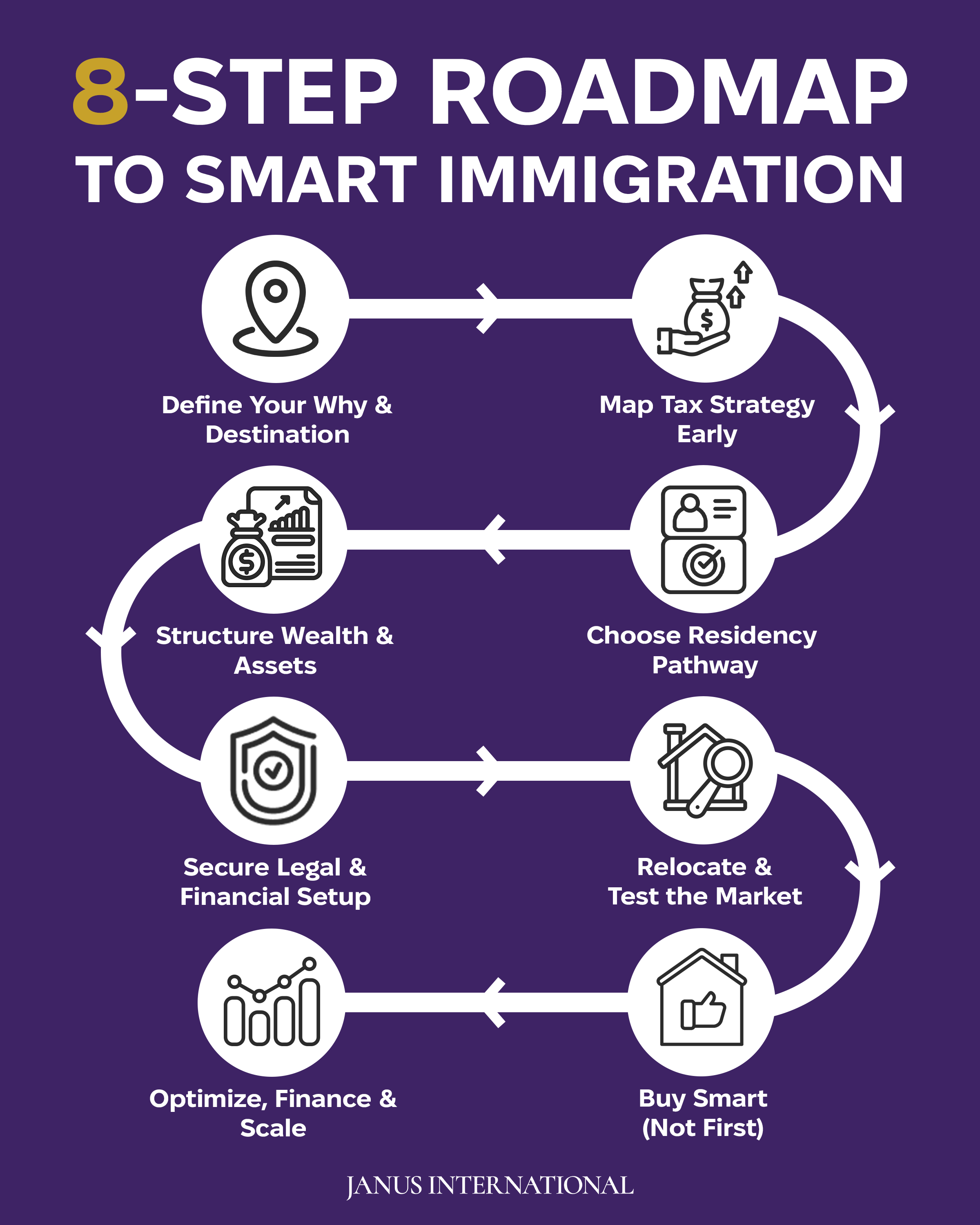
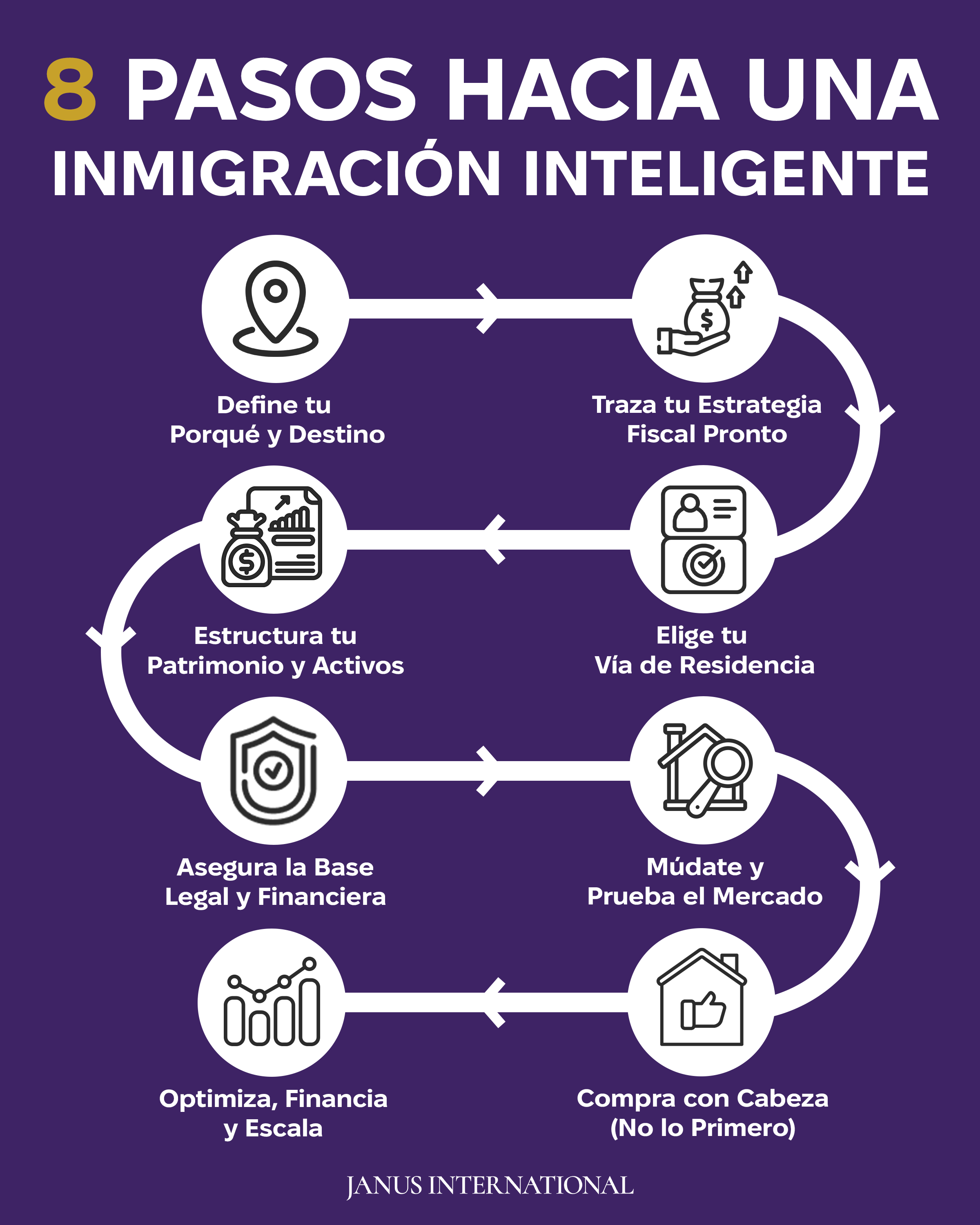
At Janus International, before residency applications, before property searches, before anything else, we map your income profile, assess your Beckham eligibility based on your prior residency history, and model your tax position year by year across the Beckham period. That output tells us which visa pathway makes sense for your situation, which region makes sense for your estate planning, and what needs to happen to your assets before you arrive and before Spanish residency begins.
Pre-arrival moves matter more than most people realize. Gifts of non-Spanish assets to family members made before you become a Spanish tax resident fall entirely outside Spain's ISD rules. Once residency starts, that option is off the table. UK ISAs lose their UK tax benefit when you become non-UK resident, and the underlying assets can be restructured before departure but not after. Life assurance wrappers structured under Luxembourg or Irish law can hold investment portfolios outside Spanish situs, defer Spanish income tax on portfolio growth, and activate a wealth-tax limitation mechanism after the Beckham period. These are not exotic manoeuvres. They are standard planning tools that are only available before the clock starts.
Once the structure is in place, the move follows. Rent before you buy. Get comfortable in the country, test different neighbourhoods, and confirm which region genuinely suits you before committing to a purchase. Register at the Padrón and with Social Security when we advise you to. We file the Modelo 149 within six months of that Social Security registration date. Then, once the tax regime is secured and the region confirmed, you find the property.
If you have a business idea and are considering the entrepreneur route to qualify for the Beckham Law, we can help you produce a business plan formatted to Spanish government requirements and assist with deploying the accompanying website. The entrepreneur route has specific qualifying criteria, and the documentation needs to be structured correctly from the start.
The table below shows the annual income tax saving under the Beckham Law versus standard IRPF, using combined national and Madrid regional rates. The arithmetic is simple.
| Annual income | IRPF (standard) | Beckham (24%) | Annual saving | 6-year total |
|---|---|---|---|---|
| €80,000 | €30,200 | €19,200 | €11,000 | €66,000 |
| €120,000 | €49,700 | €28,800 | €20,900 | €125,400 |
| €180,000 | €79,400 | €43,200 | €36,200 | €217,200 |
| €250,000 | €114,500 | €60,000 | €54,500 | €327,000 |
| €400,000 | €188,500 | €96,000 | €92,500 | €555,000 |
IRPF estimates use combined national and Madrid regional rates. Beckham is calculated at a flat 24%. Both regimes are subject to the standard Spanish Social Security contribution cap of roughly €3,966 a year for employees. Foreign income under the Beckham Law is excluded from Spanish tax entirely, which creates a second layer of saving for clients with significant non-Spain income.
See the difference on your own income. Estimate your Spanish tax under standard IRPF and the Beckham Law in a couple of minutes.
Open the tax calculatorIf you have read this far, you have most likely already done the enjoyable first step. You know why you want Spain and you have a rough idea of where. You have probably been looking at listings, bookmarking neighbourhoods, maybe watching the Spanish property market from a safe distance while telling yourself you will act when the time is right. That is a perfectly reasonable place to be. The next step is less glamorous but more important.
Spain is extraordinary because it makes people feel settled very quickly. Settlement and structure are not the same thing. The gap between them is where most of the expensive mistakes happen.
If you are reading this and realize you have already made some of these moves in the wrong order, that is not a reason to panic. There are often more options than people expect even after the fact, and the first step is simply understanding exactly where you stand.
Most advisors begin tax planning after a client has relocated. Our position is the exact opposite, because we know how quickly the timeline moves and how costly mismanagement is. Janus International looks at your immigration pathway, tax structure, asset planning, property timing, and legal setup as a single connected picture rather than as separate appointments with separate specialists. That joined-up approach is what keeps the money where it belongs, with you, in Spain, at a long dinner that starts at nine.
Prefer to read offline, print it, or share it with your advisor? Grab the PDF.
This article is for informational purposes only and does not constitute tax or legal advice. Individual circumstances vary. Contact Janus International for advice tailored to your situation.
Yes. Your visa choice depends on your tax structure, and the region where you buy should follow your tax regime, not precede it. By the time you have found a property, many planning options have already narrowed, and once you register some close permanently. Map your tax position first.
Tax first. Map your tax position and Beckham eligibility, then choose the visa route that fits, then the region (which affects inheritance tax), then rent to test an area, and only then buy. Doing it in this order keeps open the options that a property-first approach closes.
For a €250,000 earner the Beckham Law versus standard IRPF is worth roughly €327,000 over six years. On €80,000 the six-year saving is about €66,000, and on €400,000 about €555,000. Estimate your own figure with our Spain tax calculator.
The Modelo 149 must be filed within six months of first registering as a Spanish resident with Social Security. Miss that six-month window and the flat 24% regime is permanently closed for that period of residency. There are no extensions.
Yes. The US taxes citizens on worldwide income wherever they live, so moving to Spain does not remove your US filing obligations. The US-Spain treaty and the Foreign Earned Income Exclusion prevent double taxation when structured correctly, but this needs planning before you move.
The decisions you make before registering in Spain can save you hundreds of thousands, and many of them close permanently once residency starts. The sooner we map your position, the more options you have.
Book a Consultation