Visa
The 90/180-Day Rule
How long you can actually stay in Spain, and how Europe's new digital borders enforce it.
Read article
How a football transfer created Spain's most valuable tax regime. A flat 24% for up to six years, who qualifies in 2026, and the deadline you can't afford to miss.

Whether you follow football or not, you know the name David Beckham. You might be an avid fan, or you might just recognize his name from the film named after his famous curved free kicks, Bend It Like Beckham. What most people don't realize is that his talent didn't only bend the physics of a football. It also bent the tax law of Spain.
If you're considering a move to Spain, the history and the culture matter as much as the tax benefits. You'll come to Spain for the lifestyle, not to wrestle with the Spanish tax system, and that's where Janus International comes in. We make the tedious parts simple and the whole process enjoyable. There are a few football videos and documentaries linked at the end if you'd like to make your research genuinely watchable. Before that, here's a look at what we'll cover, how the Beckham Law came to be, the Real Madrid power players behind it, what the Galácticos era looked like, what's left of the law today, and how you can use it to protect your wealth.
Beckham's transfer to Real Madrid was one of the biggest in football history, and it took one of the most powerful men in Spain to pull it off.
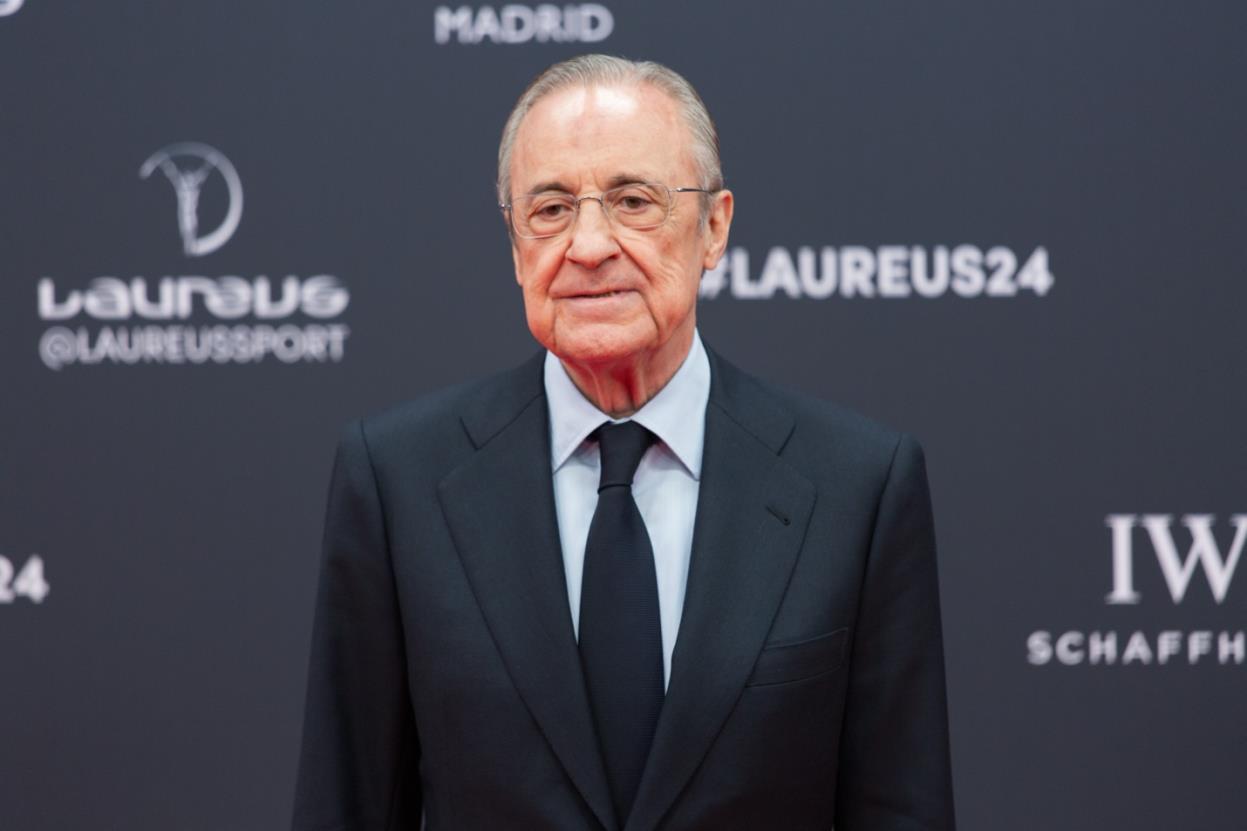
Florentino Pérez built his fortune through ACS Group, one of the largest construction companies in Europe. When he ran to become president of Real Madrid, he made one campaign promise, to sign Luís Figo from Barcelona, Real Madrid's fiercest rival. He kept that promise within days of taking office. Pérez's arrival ushered in what football fans now call the Galácticos era. His plan was simple and audacious. He would sign the most famous footballer in the world every single summer. He also reimagined how football clubs made money, shifting focus away from ticket sales and toward merchandise, sponsorships, and building Real Madrid into a truly global brand.
The problem was that Real Madrid was drowning in debt when Pérez took over. He had to move quickly. Pérez sold the Ciudad Deportiva, Real Madrid's training ground, to the Madrid regional government for €500 million, using his close ties with the People's Party led by José María Aznar to make the deal happen quickly. The land was rezoned for commercial development shortly after. With the cash in hand, Pérez bought elite players like he was ordering Spanish tapas. He signed Luís Figo for €60 million in 2000, Zinedine Zidane for €73.5 million in 2001, Ronaldo (the Brazilian one, not Cristiano) for €45 million in 2002, and Beckham for €37.5 million in 2003.
Pérez was masterful at assembling names, but critics have long argued that his decision to sell Claude Makélélé, when Makélélé asked for a pay rise to match his new teammates, was where the project began to fall apart. Makélélé was the defensive engine that kept the whole machine running.
Zidane said Pérez had swapped the engine for more gold paint, putting the car's flash above its function. It was a line that aged well.
If Pérez was going for flash, he blinded everyone with the Beckham deal. After being dropped from the starting lineup and reportedly having a boot thrown at him in the Manchester United dressing room by Sir Alex Ferguson, Beckham was sold to Real Madrid for €37.5 million. His kit sold out within hours of the announcement.
To make the deal as attractive as possible, Pérez lobbied the Spanish government for what became Law 62/2003, better known as the Beckham Law. The law allowed foreign workers in Spain to be taxed as non-residents, meaning they only paid tax on their Spanish income rather than their worldwide income, at a flat rate of 24%. This was a significant advantage for celebrity footballers whose wealth came largely from commercial deals and club contracts outside Spain.
For context, someone earning €250,000 a year in Spain would typically pay around €112,000 in income tax. Under the Beckham Law, that dropped to around €60,000, a saving of roughly €50,000 in a single year. For Beckham himself, whose earnings spanned multiple continents and shirt sales in every timezone, the savings ran into tens of millions.
After Beckham arrived, the team went three seasons without winning a trophy, which suggested that even a squad of global superstars eventually needs a working engine beneath the paintwork. Over six years the Galácticos won seven trophies, which left plenty of room for debate given the hundreds of millions spent.
To be fair to the era, before Beckham arrived this team produced arguably the greatest single moment in football history. In the 2002 Champions League final against Bayer Leverkusen, Zidane struck a left-foot volley in the second half that has never been matched for technique or occasion. Pérez resigned as president in early 2006, and the Galácticos era was over, at least for the time being.
The story didn't end there. In June 2026, Pérez was re-elected as Real Madrid president with around two-thirds of the vote, extending his mandate through 2030. He is now the most decorated president in the club's history, with 37 titles and seven Champions League trophies to his name. The Galácticos may have been his spectacle, but La Fábrica, the youth academy he championed, is what gave the club its lasting structure.
After the 2008 financial crisis, Spaniards were struggling and the government could no longer justify celebrity footballers enjoying low flat-rate taxes while ordinary people tightened their belts. In 2010, professional athletes were expressly excluded from the Beckham Law. By then, Beckham had already left anyway, having moved to LA Galaxy in 2007.
But the law didn't disappear. In fact, it has been expanded significantly since. Under Spain's Startups Act (Law 28/2022), which came into force in January 2023, the prior non-residency requirement was cut from ten years to five. Practically: if you were a legal resident of Spain seven years ago and left, you can now qualify where you couldn't before. The law now covers executives, entrepreneurs, researchers, digital nomads, foreign workers, and highly qualified professionals, and it can extend to qualifying family members.
To be eligible, you cannot have been a tax resident of Spain during the five years before your year of application. You need to show that you moved to Spain for work-related reasons and that no more than 15% of your professional time is spent outside Spain. Critically, you have to apply within six months of registering with Spanish Social Security. Miss that window and you lose the benefit permanently for that period of Spanish residency. No extensions.
If you qualify, you get the flat 24% rate for your year of arrival plus the following five years, which is six years in total.
| Standard rate | Beckham Law (24%) | |
|---|---|---|
| Income tax / year | ~€76,000 | €43,200 |
| Saving over 6 years | ~€193,800 | |
To put that in real terms, if you move to Spain and earn €180,000 a year from your business or property income, under the Beckham Law you pay €43,200 rather than roughly €76,000. Over six years, that's a saving of around €193,800. For someone earning €250,000 a year, the six-year saving can reach €300,000.
Curious what the Beckham Law could save you? Estimate your own Spanish tax exposure in a couple of minutes.
Open the tax calculatorJanus International makes the documentation process straightforward. We look at your complete picture, spanning immigration, tax advisory, property, and investments, rather than treating each piece in isolation. That joined-up approach is what saves clients money that a more fragmented service would leave on the table. We're an all-inclusive boutique built around you, and we're excited to help you make the most of your move to Spain.
Prefer to read offline, print it, or share it with your advisor? Grab the PDF.
The videos and documentaries referenced above. Your due diligence on Spanish tax law has never been this watchable.
This article is for informational purposes only and does not constitute tax or legal advice. Individual circumstances vary. Contact Janus International for advice tailored to your situation.
You must not have been a Spanish tax resident in the previous five years, must move to Spain for work-related reasons, and must apply within six months of registering with Social Security. It covers employees, executives, entrepreneurs, researchers and digital nomads, and can extend to family. Professional athletes have been excluded since 2010.
Not usually. The Beckham Law generally requires qualifying employment income, so traditional freelancers and self-employed autónomos are mostly excluded and fall under standard IRPF. The main exception is the entrepreneur route with a qualifying project. Getting the structure right before you arrive is what decides eligibility.
On €180,000 a year you would pay roughly €43,200 instead of about €76,000, saving around €193,800 over six years. For a €250,000 earner the six-year saving can reach around €300,000. You can estimate your own figure with our Spain tax calculator.
You must file the Modelo 149 within six months of registering with Spanish Social Security. Miss that window and you lose the flat 24% rate permanently for that period of residency. There are no extensions, which is why timing your registration matters.
Yes. Under the Beckham Law your foreign-source income is largely exempt from Spanish tax for up to six years, and your Spanish-source income is taxed at a flat 24% instead of progressive IRPF rates up to 47%.
The six-month application window starts the moment you register with Spanish Social Security. The sooner you know where you stand, the better.
Book a Consultation